Biomechanic Modeling for Tai Chi
To build computer models of how Tai Chi utilizes the body, a number of techniques are utilized. This is due to the complexity of doing calculations that need to eventual incorporate the whole body at a detailed level.
Traditional modeling of biomechanics
Standard models of movement utilize the concept of sticks (bones) and rubber bands (muscles). The rubber band connects the origin to insertion. When a muscle/tendon folds over a joint, a pulley is introduced to the model.
Figure 1: Standard model of walking structure generated in OpenSim
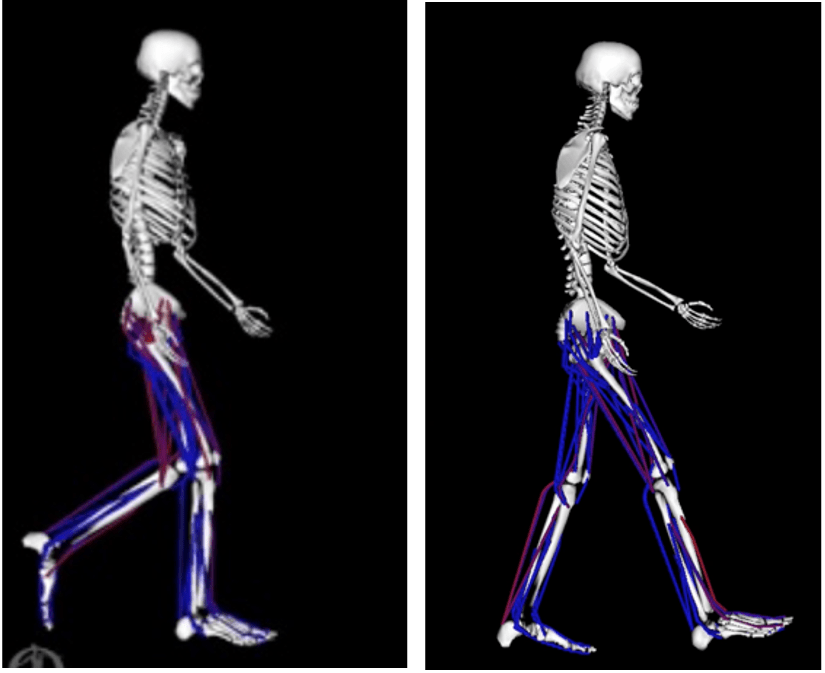
Newer types of computer models being utilized
Finite Element Analysis (FEA): Uses a mesh to approximate the structure and to calculate information at various parts of the mesh.
Figure 2: An example of the mesh that is used in modeling the bone movement of the elbow
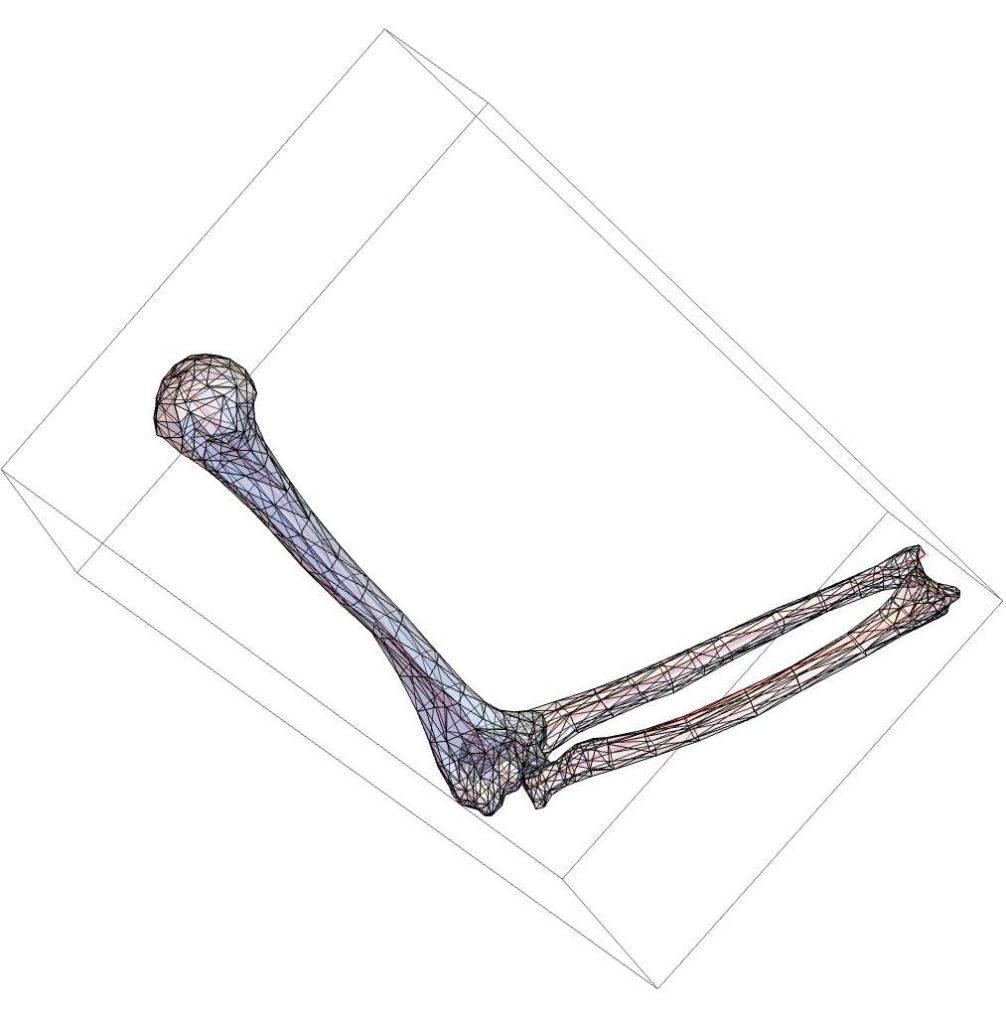
Flexible Body Analysis: Is a version of FEA that allows the mesh structure to change. These can also be used for fluid flows.
Multibody Dynamics Methods: Integrates rigid and flexible body components to reduce the computational demands.
Index: Science of Tai Chi Poster Info
References:
Figure 1: Delp, S. L., Anderson, F. C., Arnold, A. S., Loan, P., Habib, A., John, C. T., . . . Thelen, D. G. (2007, Nov.). OpenSim: Open-Source Software to Create and Analyze Dynamic Simulations of Movement. IEEE Transactions on Biomedical Engineering, 54(11), 1940-195 (Image generated using this software)
Figure 2: Stewart Dickson (2012), “3D Skeletal Anatomy of the Arm” Wolfram Demonstrations Project. demonstrations.wolfram.com/3DSkeletalAnatomyOfTheArm/ (modified by James Sturnfield to allow elbow action)
© 2026 James F Sturnfield

